Home 

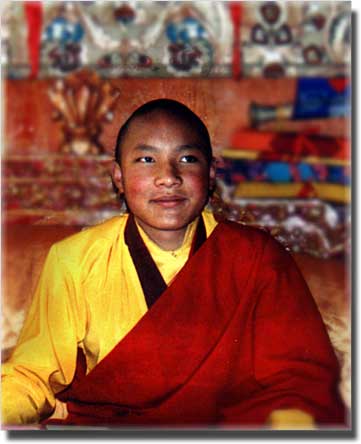
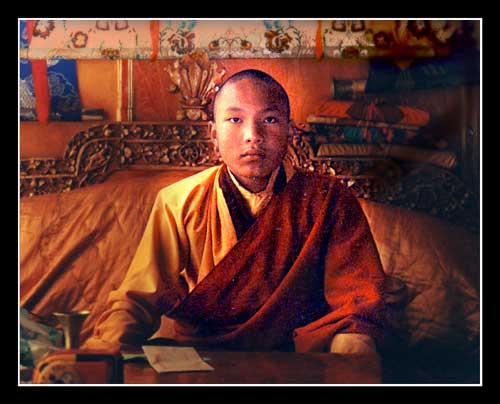
Den 17. Karmapa.

Tsurpu Monastery. Lørdag d. 30

.


H.H. den 17. Gyalwa Karmapa.

.

.

Efter rundturen på klosteret blev hentet vi ned til audiensrummet hvor vi bliver budt mere te.

Hvem har billederne Karmapa skal signére ? Og den vandfaste tusch ? Velsignelsessnorene ?

Så kom der en og sagde: "Come! come!" og alle fór ud af døren.

Er det nu ?

.

Steen har Kathak'sene klar og afsted det går, anført af munken.
Ned ad mørke gange, rundt om hjørner og op ad stejle trapper.

Hvem har det fine papir fra Kathmandu som vi vil have Karmapa til at tegne kaligrafier på ?
Det ligger i bilen. Bilen er låst !
Hvor er chaufføren ?
Steen får fat i ham og de løber ned til bilen, får fat i papiret og galoperer tilbage igen og ankommer næsten samtidig med os oppe på taget af gomphaen ved den lille hønsestige op til Karmapas værelse.
Lungerne går som blæsebælge. Det er hårdt at lege "Stairmaster" i 4.500 m højde.
Chaufføren var blevet tabt undervejs.


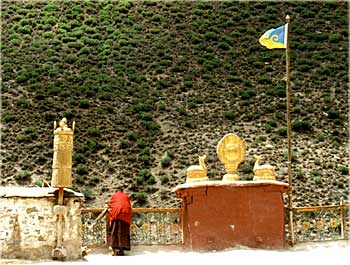
På taget af Tsurpu Monastery.

.

Den stejle hønsestige uden rækværk er nu fuld af folk og samtidig med at Lama-la slår forhænget til side og glider gennem døren, smutter han ud af sine støvede, kinesiske hyttesko, og siger henkastet "Shoes off".
Hvad ? Her ?

Der er ingen steder at sætte dem og vi har hænderne fulde af Kathaks og ting og sager.

Mens jeg kæmper med skoene og med ikke at falde ud over trappen, forsvinder Steen ind bag forhænget og mens de andre ledsagere skubber bagpå, får jeg omsider sparket den sidste sko af, springer op af øverste trin og befinder mig pludselig i et større rum, svagt oplyst af et gyldent skær (fra gardinerne) og fyldt med lamaer og lignende høje herrer, der står og iagttager vores indmarch.

.

Mine øjne glider over mængden. Hvad nu ?
Skal vi stille os på række og vente på Karmapas indtræden ? Eller hvad ? Jeg søger forgæves efter et tegn fra mængden.

Nede for enden af rummet kigger et par gnistrende sorte øjne interesseret på.
Det er ham fra billederne !    Karmapa !
Jeg ser ikke længere de andre eller lamaerne.
Min bevidsthed er fokuseret på personen i den anden ende af rummet, der er så levende og så lig billederne af sin forgænger mens jeg i en svævende bevægelse glider fra døren og ned for fødderne af ham.
Han lægger sine hænder på mit hoved og helt spontant udbryder jeg: "Thank you".
Han griner og lægger Kathak'en om halsen på mig.

Det var vist alt. Hvor blev de andre af ?
Jeg bakkede ud til siden og om bag for at lade de andre komme til.
De er først lige ved at blive færdige med de tre obligatoriske glidefald man naturligvis udfører når man vil vise respekt for en som ved mere om læren end man selv gør... (Ups. Sorry).

Jeg rødmer lidt og får tid til at se mig omkring mens de andre hilser på.
.

.

.


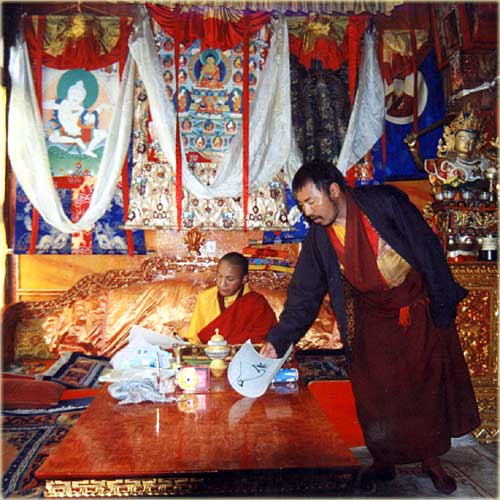
Karmapa laver kaligrafi til os.

.


Interview with Interview with H. H. the 17th Karmapa Ogyen Trinley Dorjee - Nov. 2001


Tsering Dhondup: What in your view is the essence of Buddhism?
Karmapa: In my view, the essence of Buddhism consists in reducing physical, mental and verbal defilement. We should not harm other beings even if we cannot help them. It is important to develop love, kindness and sincere motivation. It is very important to practice these Bodhisattva qualities and contemplate on the essence of Bodhichitta.

.

T.D: How can one manage negative emotions like attachment, fear hatred, pride, etc?
Karmapa: Lord Buddha has shown that there are limitless methods to tackle one's problems. We must understand these methods. The important qualities are contemplation on the loving kindness, compassion, emptiness and meditation and practice them in our daily life. We must sincerely dedicate these qualities for the benefit of other sentient beings. It is also very important to have a genuine master to guide one in the right way.

.

T.D: The human society is beset with numerous problems, or rather, conflicts. How do you think they could be best addressed?
Karmapa: There are many problems in our society and all these occur due to selfish motives. Important tools to resolve conflicts can be developing compassion to other beings, developing sincere motivation and putting effort to bring unity and harmony. It is important to think others as more important than oneself.

.

T.D: How can we make our life more meaningful by applying the concepts of Buddhist philosophy?
Karmapa: Our body, speech and mind are laced with defilement due to which we find ourselves subject to various kinds of suffering. We must strive for happiness by training our mind. If we manage to train our mind, we can bring peace, happiness, harmony and joy for all sentient beings. The problem is that we are not practically achieving them because we fail to train our mind. Buddhism is a very strong tool for taming the mind and bringing it to a peaceful state. So, if we can train our mind, we can definitely achieve peace and happiness, which is the ultimate aim of our life.

.

T.D: How do you compare modern life to the ancient?
Karmapa: The only difference that I find between ancient and modern life is the development of modern scientific technology. With the development of science and technology, there are fast communication between nations and individuals. But despite the absence of these, I feel that our ancient ancestors had more joy and happiness. People in the past were more peaceful, more motivated, more patriotic, and there was more love among the people. I respect the ancient people because they were very genuine and sincere in nature and understanding. And ancient culture is richer.

.

T.D: Do you have any special advice for our readers?
Karmapa: I have not much things to say now, yet I believe that it is very important to build one's life in a very meaningful way. Thinking about making one's own life as well as dedicating work for the goodness of other beings is equally important. The modern life is more busy and tougher, so it is important to strive to build sincere intention, motivation and indulge in positive and pure actions. As a Tibetan, we should not waste our time. We must do our own work as well as we must think about our nation to bring more unity and harmony among ourselves as well as with other people. Development of positive wishes is also very valuable.


Courtesy: Tibetan Review (November 2001) http://www.timesoftibet.com

.


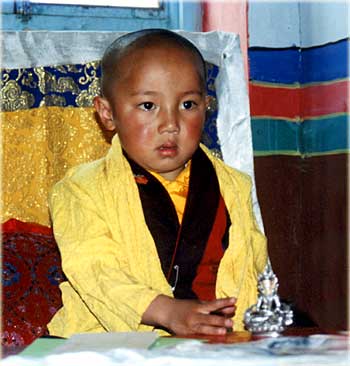
Nenang Pawo Rinpoche.
Og så gik vi ned og hilste på, og overrakte gaver til den lille Pawo Rinpoche.

Ud over donationer til hans kloster og munkene, havde vi lidt sager med som passede til en 3-årig knægt.

.

Den 10ende Pawo Rinpoche (1912-1991) var elev af d. 15. Karmapa.
Den 17. Karmapa er nu lærer for d. 11. Pawo Rinpoche.

.....


Drölkar, vores tolk, tager de sidste billeder.
Efter middagsmaden fulgte en official og vores guide og oppasser os helt til døren og ønskede os god tur hjem.
.

.

.


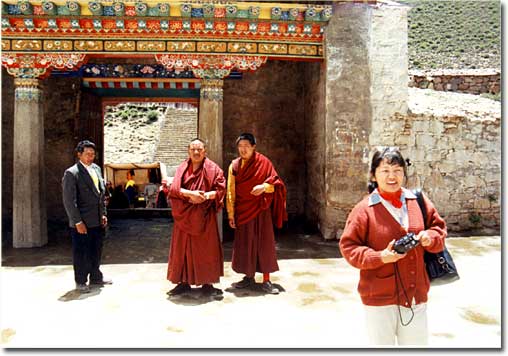
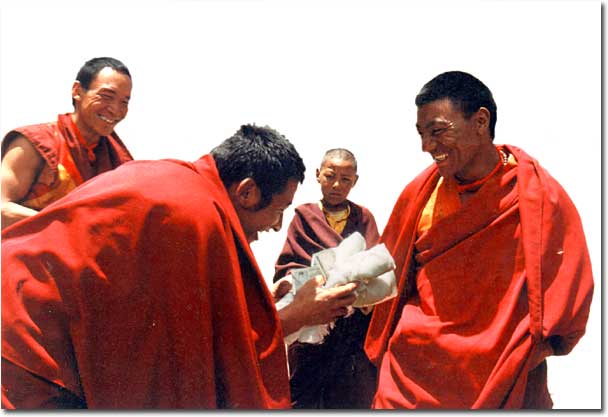
Kathak'sene forærede vi nogle munke inden vi kørte. Det gav anledning til at fyre en joke af.

Bemærk lige overarmene på fyren til venstre. Buddhistiske øvelser er ikke kun guf for hjernen...
(De fleste af dem er forresten også vegetarer.)


<<prev

Next>>